


By: Rebecca Russavage
The cost of building new infrastructure looms over most conversations about the US Energy Grid. Anyone who has driven a highway or ridden a train can start—but only start—to apprehend the cost of building the miles of swooping lines that feel as much a part of the American landscape as the Rockies. The power that travel along those miles of infrastructure has historically been generated at plants that take up entire islands.

One of those islands is situated off the Connecticut coast. There, a power plant was approved by the Norwalk Zoning Committee in 1953 despite community petitions to turn the island into a park. Framed newspaper articles from the time still hang on the walls of the plant itself, extolling how the new coal-based power plant “won’t pollute.” The words echo off the walls of an abandoned building on land that’s contaminated beyond reuse. This is posing a new infrastructure question: what to do with the acres of unusable land, the floors of abandoned concrete, and the miles of wire once they reside on land too contaminated for use?
The Manresa Wilds project has an answer, and an optimistic one. That contaminated land—acres of ash-filled containment ponds from the coal furnaces that once brought power to Connecticut homes—can be remediated and turned into an active community resource. Courtesy of Austin and Allison McChord, a local philanthropic couple, Manresa Wilds has a legitimate path to reuse. Ambitious plans are being made to design community-forward space—research centers, parks, a forest, public beachfront access in an area where most of the shorefront is private. The partnerships in place, the steps being taken, and the progress already show how worthwhile the project is and how satisfying the payoff will be. However, such a project is not simple. The remediation alone will take years and cost at least ten times the purchase price of the land itself. The cost we all pay for powering electric devices with some of the dirtiest tools possible—coal, gas, and oil—is taking on a new dimension as funds need to be raised to recover valuable real estate from contamination.
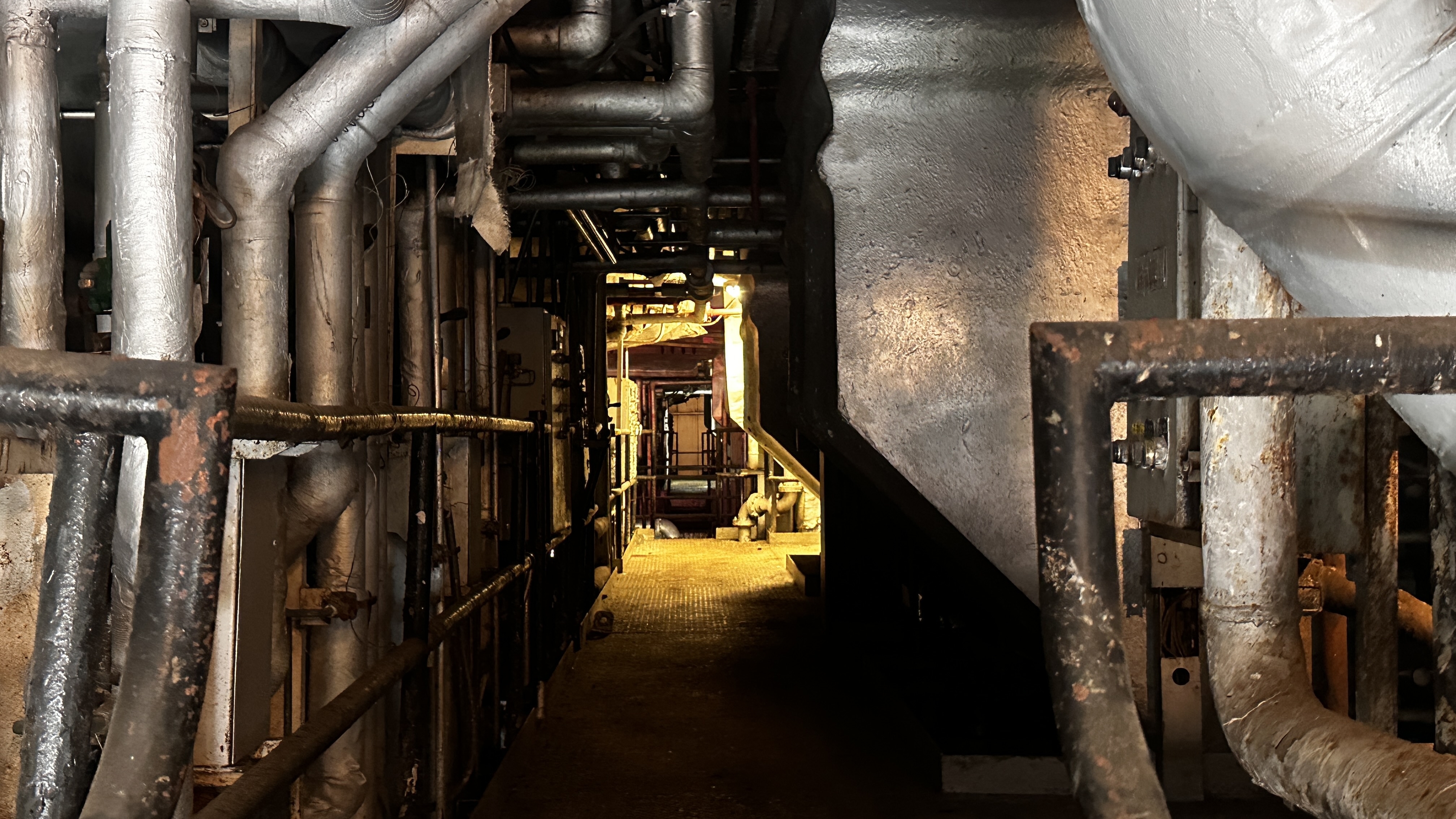
The plant itself offers a look back in time. It originally ran on coal, but transitioned to oil in 1972. The coal furnaces that were suspended in midair despite being larger than entire classrooms, pulley chains, and cast iron valve releases were part of the fabric of a standard power plant. After a transition to oil in the 1972s, it was designated as one of Connecticut’s “Filthy Five.” It continued to run nearly nonstop until it’s acquisition by NRG in 1999, when it was redesignated as a peaker plant—a plant designed to operate only when power demands reach dangerously high levels. Think 5 PM during an August heatwave, when everyone comes home from work and turns on the TV, oven, and air conditioner at the same time. Peaker plants would cover that heavy demand, and a crucial factor was their ability to start generating and delivering power quickly. Manresa Wilds was one of these, meaning its acres of coal ash were spent to provide operating capacity during the 1% of the year when dangerous levels of peak demand require additional power. Peaker plants are generally more expensive and emit more dangerous gases than baseline power plants, but the opportunity cost represented by the scale of infrastructure meant sit idle except for a few days of the year is sobering—and what is being recovered by the Manresa Wilds project.
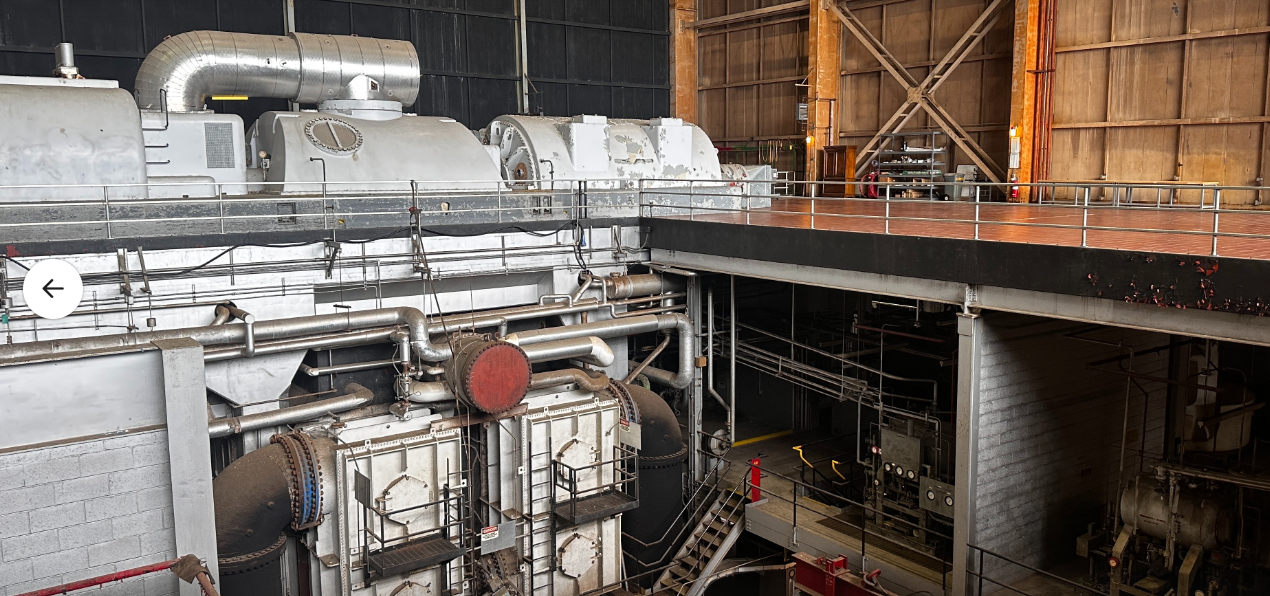
The power plant now known as Manresa Wilds may have been decommissioned, but as anyone who was in the Northeast in July knows, the need for peak power support has not gone away. Rather, the ongoing trend toward building electrification (such as that led by ClimateHaven’s incubator company Matcha Electric) means the demand will only increase. Luckily, there are viable and exciting technologies proving that renewable electric power is not just the most environmentally conscious choice, but the most practical one as well.
While the clean energy space itself is well-documented, a compelling solution to peak power pressures is demand management. One example of this is a simple intervention in the physical IoT space: Revert Technologies (another ClimateHaven company) is helping companies cut idle power usage, or the power drawn when an appliance is plugged in but idle, through a plug adapter that can be managed remotely. This frees off-peak power to be stored either in local batteries or in battery fields to offset peak demand.
As the grid is updated to incorporate the smart devices connected to it, aggregators can also prompt lower usage rates at times of peak load. For instance, if an EV is fully charged but still plugged in, an aggregator can disconnect it from the grid. One EV won’t make much of a difference, but an entire fleet distributed throughout a city might. Another ClimateHaven incubator company, Aion Grid, offers full-service support for utilities looking to implement this type of distributed energy resource (DER) management. This is how, with a few layers of software and a utility agreement, devices from smart thermostats to rooftop solar panels can be part of overall grid resilience—taking the place of peaker plants and allowing more of them to be turned into something like Manresa Wilds.
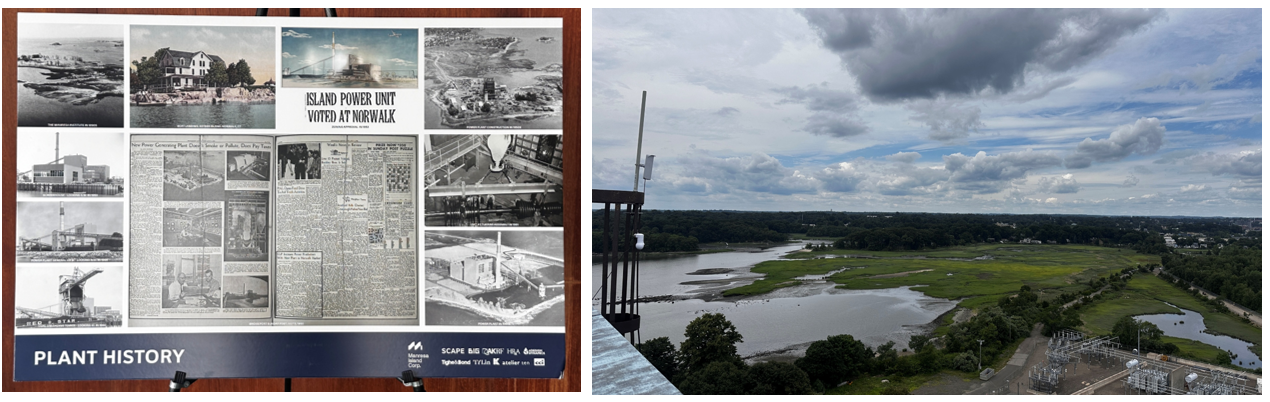
While the change in grid dynamics can allow us to look forward to a cleaner, more efficiently managed future for electrification than the retired fossil fuel peaker plants offered us, the Manresa Wilds project is about more than that transition. It is taking that past and transforming it into a resource for the community, the environment, and continued research that will drive ecological knowledge and the environmental transition. Partnerships have already been established with leading institutions in marine science and environmental learning, including the Maritime Aquarium at Norwalk, Woods Hole Oceanographic Institution, Wesleyan University, and Sacred Heart University. Opportunities are rife for pilot projects as local startups continue to explore clean energy opportunities, lab space is open for early-stage research, and arts partnerships are already demonstrating what it looks like to create in such surroundings. The local community is highly engaged in the design of the park itself, offering feedback of all kinds as the the project works toward the vision that was originally advocated in the 1950s—that of a community resource that adds scientific, social, and environmental value to its regional neighbors, not oil spills and pollution.
Sources:
https://www.enelnorthamerica.com/insights/blogs/what-is-a-peaking-power-plant
https://www.utilitydive.com/news/the-value-of-less-quantifying-the-benefit-of-peak-demand-savings/408565/
https://www.gao.gov/products/gao-24-106145
https://ctmirror.org/2024/10/03/manresa-island-norwalk-ct-park/
https://www.manresawilds.org/about/site-history
Photo Credit: All photographs featured in this blog post were taken by the ClimateHaven team during a site visit to Manresa Island.