

By: Ryan Dings
Entrepreneurship is one of the few activities as a student that doesn’t come with a ready-made vetting process. Apply to law school or med school? There’s a regimented process for that. Get a job in finance, consulting, or tech? There’s a path for that, with plenty of chances for feedback (re: rejection) along the way.
Make the leap from student founder to full-time founder? There is no clearly regimented process for that.
Adding to the challenge: startups are idiosyncratic. Founders are too. Markets change, as do the problems facing investors and customers in those markets. Hence, we’d be trying to jam a square peg into a round hole if we designed a regimented step-by-step process for entrepreneurship.
Trust us, there’s no step-by-step guide. But, before student founders make the decision to become a full-time founder, they deserve help pressure-testing your startup. More importantly, founders deserve help pressure-testing their own ambition to build a startup.
What’s the best way to pressure test entrepreneurial ideas? With questions - lots of questions! Entrepreneurship is the ultimate exercise in curiosity – and the best way to cultivate founders’ entrepreneurial ambitions is by curiously examining the key aspects of the business they aspire to build to uncover challenges, unlock opportunities, and strengthen founders’ resolve.
That’s why we designed the Campus to Market Program – C2M for short – and brought it to the Tsai Center for Innovative Thinking at Yale (Tsai CITY) in Spring 2026. We’re excited to bring the program back to Tsai CITY for the Fall 2026 semester.
C2M applies ClimateHaven’s 4P Framework, which divides the foundation of a successful startup into four pillars: Problem, Product, People and Profit. Each pillar is equally important and deeply connected to one another. Without all four, it would be nearly impossible to build a scalable, enduring business.
With each pillar, we ask and answer two key - and very loaded – questions:
• Problem: Are you solving a market-based problem and can you communicate it?
• Product: Does the solution adequately solve the problem and can you scale it?
• People: Have you assembled the team to do it and can you manage them?
• Profit: Can you create a scalable, gross margin positive business and can you fund it?
Curiosity builds strength. Clear, cogent answers to each pillar’s questions – or an understanding of what it would take to provide such answers – is the prerequisite to moving onward to the next pillar.
We establish an order for the intensive, but pillars can be constructed in any order. Sometimes, the People come together so clearly that you know you have the right people in this right moment to tackle the Problem. Our goal is to help student founders answer the key questions and understand the connective tissue between each pillar.
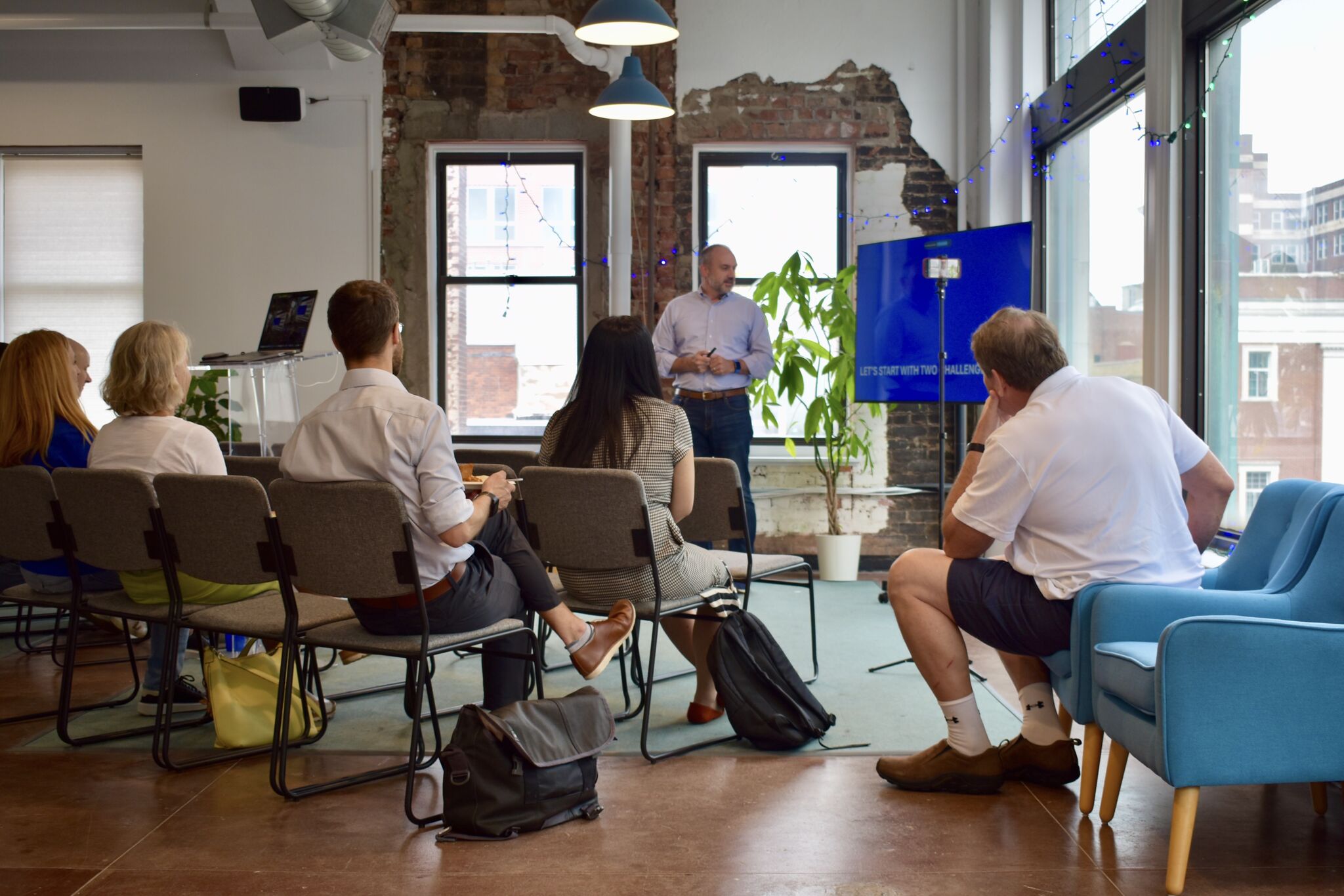
We will tackle each pillar in a 90-minute session, which will be a mix of lecture, discussion, and interactive examination of each team’s business. Lectures are designed to provide a market-based lens through which the merits of each participating startup can be questioned, evaluated and strengthened for the transition from campus to market. Likewise, hard-earned wisdom will be shared with the student founders to expose them to the realities of the market.
Student founders need to ask tough questions of themselves, too, which is what we aim to do in between sessions. One-on-one meetings with the founders provide an opportunity to deeply examine aspects of the business and explore what roles founders have the talent and desire to play. We’re not trying to discount founders’ ambition, but we are trying to help founders understand the type of team – including the addition of co-founders – they will need to build.
Deliverables will build upon each session and help teams create, refine and pressure-test their plans, with outcomes that when assembled will form an executive summary suitable for investors, future team members, and interested stakeholders.
The most important stakeholders of all? The founding team – and our goal is for the cumulative output of C2M to provide student founders with the confidence to answer the two key questions they face before embarking on their journey: Is this startup a scalable enterprise and am I prepared to lead it?
There’s no roadmap, there’s no step-by-step guide, there’s no LSAT for entrepreneurship, and there’s no clearly defined plan for entrepreneurship. But what we do have with C2M is the opportunity to ask the right questions, inspire curiosity, and build confidence in talented students who have the deeply rooted ambition to change the world.
Interested in learning more about the C2M and the challenges of the campus-to-market transition? Reach out to Ryan Dings at ryan@climatehaven.tech.